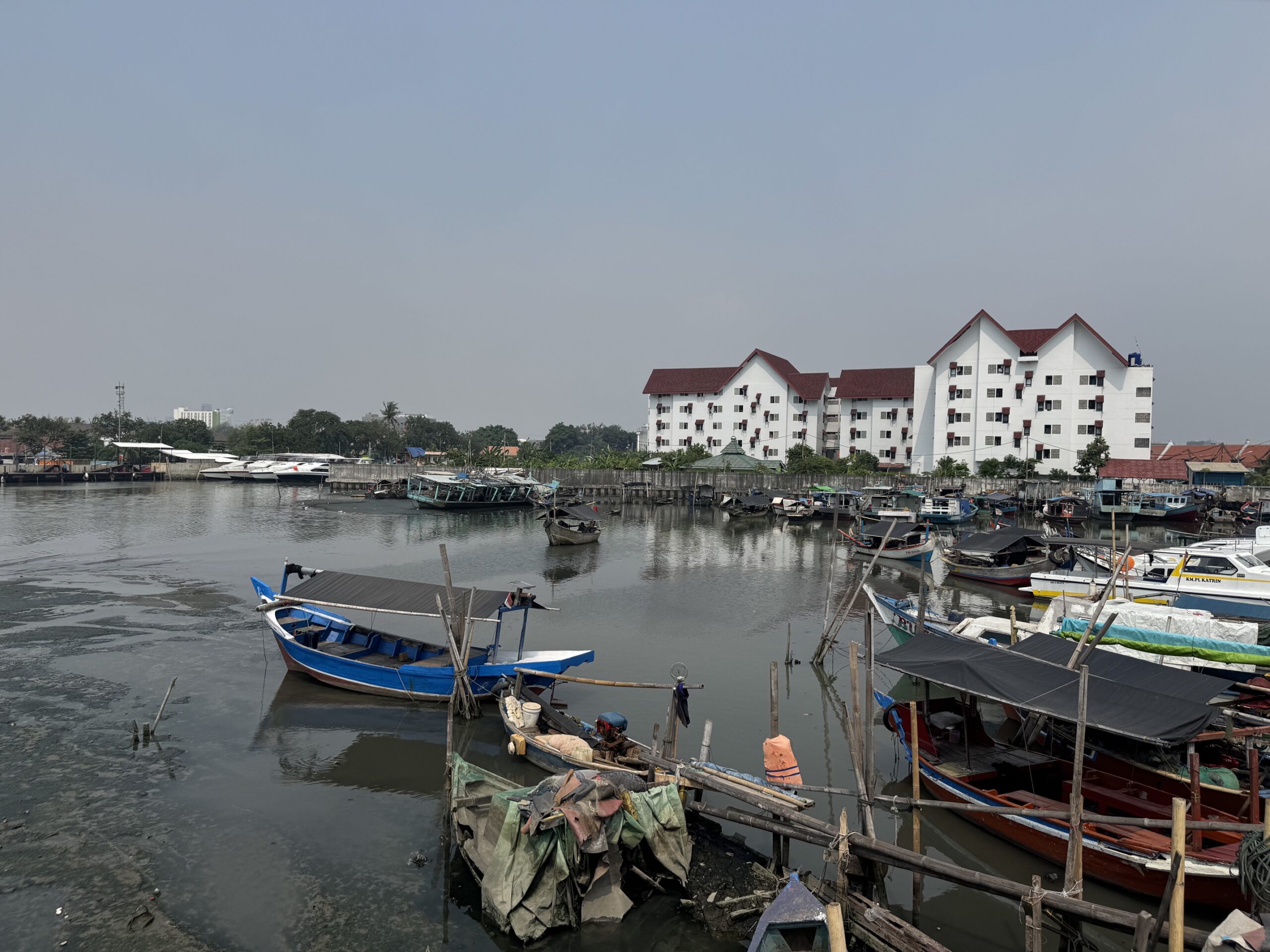
This summer, a cohort of Georgetown University graduate students traveled to Jakarta for an intensive 5-week residency as part of an applied urban planning practicum. The United Nations has designated Jakarta as the world’s largest city, with over 40 million people living in a single metropolitan area. In collaboration with Georgetown’s GSAP campus in Jakarta, students advanced field research in coastal neighborhoods facing a myriad of challenges. Neighborhood-based fieldwork required students master key methods of urban documentation, spatial research, and effective communication essential to professional planning practice.
Being on the ground in North Jakarta opened my eyes to the distinct planning legacy of post-colonial capitals, where extraction was the organizing logic and the native landscape bears the scars to this day.
– Sophie Bounsidia, Masters Candidate, Urban & Regional Planning Program
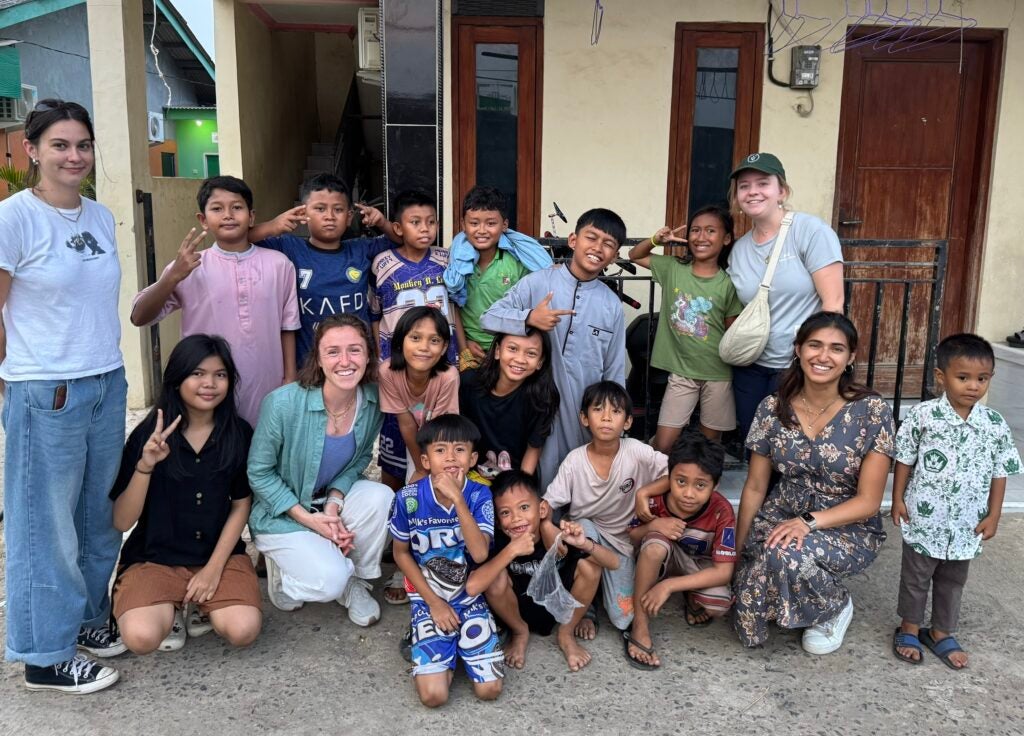
Organized by Prof. Uwe Brandes as the North Jakarta Project, the initiative spans diverse neighborhoods along Jakarta’s waterfront. These coastal communities are grappling with intersecting pressures, including rapid land subsidence, sea-level rise, major new infrastructure investments, informal land tenure, and new initiatives to preserve unique cultural resources, including Kota Tua, the historic location of Batavia and the headquarters of the Dutch East India Company. Working closely with local stakeholders and government representatives, the Georgetown team focused on developing place-based urban development strategies to address these complex environmental and social vulnerabilities in an integrated manner.
It was great being able to actually see with our own eyes the various conditions of neighborhoods in North Jakarta, seeing those nuances and speaking with actual residents is the sort of learning you can’t capture in scholarly articles or classroom lessons. As someone whose program at Georgetown has been more quantitative and data heavy, it was nice to gain qualitative research experience. Furthermore, gaining a better understanding of the political systems that govern both the city and the country showed me how important navigating such relationships is to promoting technical changes.
– Ronin McCobb, Masters Student, McCourt School of Public Policy
The trip provided an invaluable bridge between theoretical coursework in international affairs and sustainability and the physical realities of one of the world’s most rapidly changing coastal environments. Reflecting on the fieldwork. This on-ground engagement underscored how top-down policy decisions directly translate into lived experiences for waterfront residents.
Beyond field observation, the immersive format challenged participants to integrate multi-disciplinary perspectives into their academic research and ongoing resilience studies. Whether analyzing community-led adaptation efforts or evaluating municipal infrastructure interventions, students developed a more nuanced understanding of how urban strategies must balance economic growth, spatial equity, and ecological endurance.
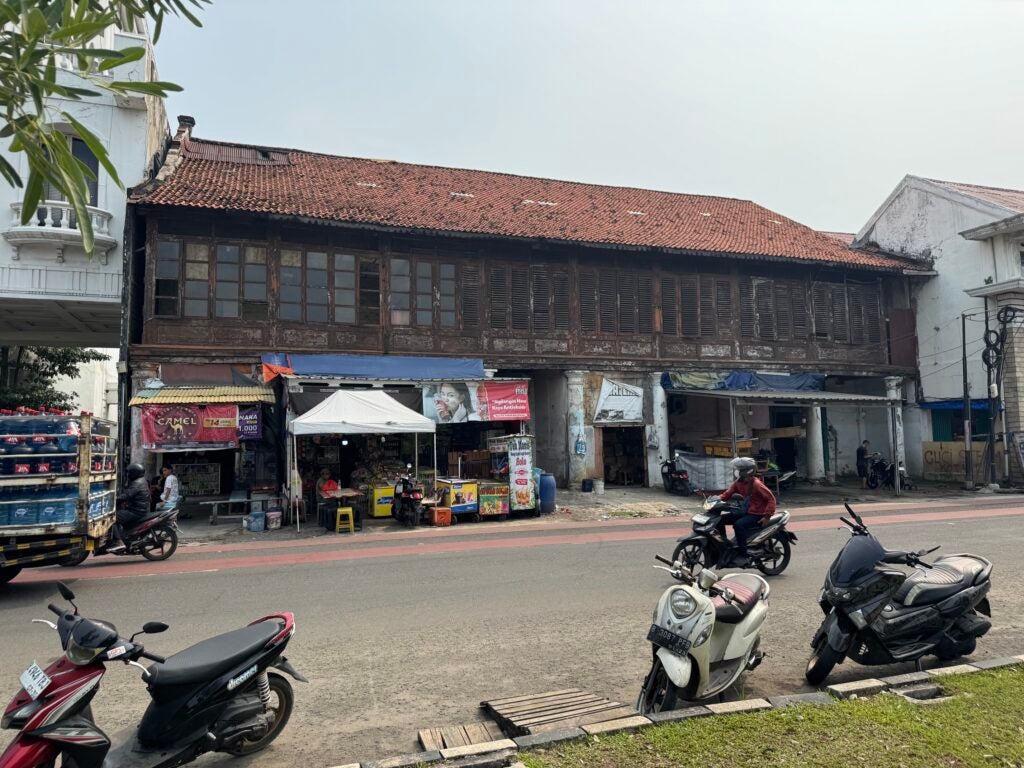
During my time there, I gained insight into the complex reality of government policies, particularly public housing initiatives for low income residents. Operating these programs within Jakarta’s government system involves significant bureaucratic processes. For example, if the plumbing system in a public housing unit breaks, repairs cannot happen right away. Instead, residents must wait for official budget cycles and allocation timelines for approval, a process that often takes several months. This buildup of procedures creates a real disconnect between government timelines and public needs: residents want immediate fixes, while state systems move slowly.
– Mimi Ngo, Masters Candidate, Urban & Regional Planning Program
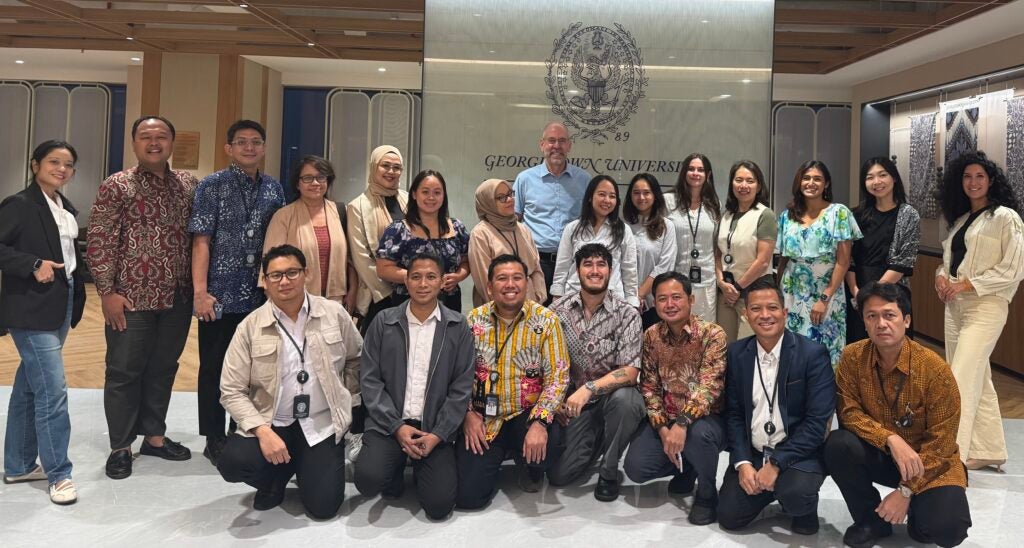
As the residency concluded, the students prepared to present their final comprehensive urban development strategies directly to representatives of the Special Capital Region of Jakarta. The data, spatial analysis, and qualitative insights gathered throughout the summer will continue to inform ongoing research and collaborative academic programs at Georgetown, leaving a lasting impact on both the students’ scholarly work and the global dialogue on urban resilience.
Walking through House of Tugu after visiting colonial-era architecture Batavia in Kota Tua, I finally understood how adaptive reuse can preserve a building’s character while making it commercially viable.
– Adote Akpabie, Masters Canditate in Real Estate